By ’Tunji Ajibade
tunjioa@yahoo.com
Some comparisons are better not made for the simple reason that they glaringly show the shortcomings in the analyses of those who made them. They may also show a lack of depth on the part of those involved. Helen Lewis, writing in The Atlantic on January 19, 2022, made one comparison that fell into this category. Here, I call attention to what she missed in her article titled “Boris Johnson is no Winston Churchill”.
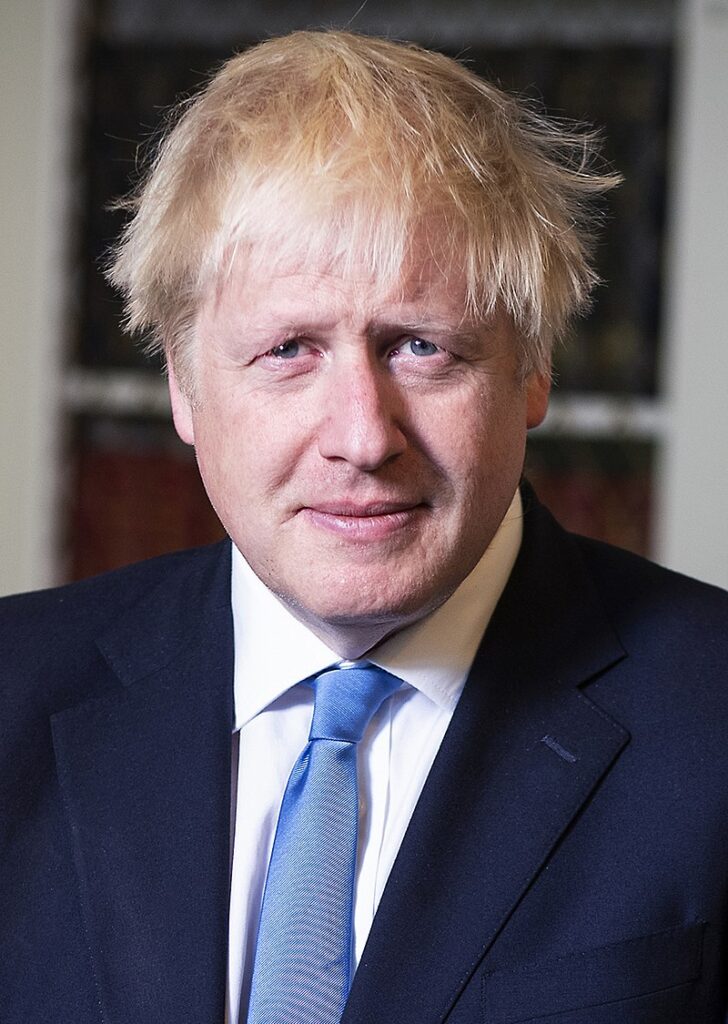
In the article, she asserted that Johnson was in the same class as a certain Neville Chamberlain who was British Prime Minister in the 1930s, rather than the late Prime Minister Winston Churchill. Nonetheless, her article isn’t the number one reason for my view as expressed here. Rather, it’s another material trending in the public space, a docudrama focusing on the Johnson years in office titled “This England”. But I shall proceed first from Lewis’ submission.
In the concluding part to her article, Lewis submitted as follows: “Johnson surely hopes that Brexit, and Britain’s successful vaccine program, will outweigh his flaws when the historical record is written. But he must be worried that, instead, he will be remembered like Neville Chamberlain: as a man who, for the good of his country, simply had to go.” There are so many issues to examine with regard to this conclusion, but I shall limit my intervention to two points. One, Lewis took two issues of historical proportion and belittled them in her effort to belittle a maverick of a politician who did his best at that stage in history. Brexit and the manner it was successfully handled, covid-19 pandemic as well as the attendant vaccination programme cannot be put in a sack and thrown into a corner as Lewis obviously tried to do. Is she aware of the finer details of history at all?
There was a major global health issue back in 1918 and people died in their millions. The political leadership at that time is mentioned till date each time the incident is mentioned. History is often written from the perspective of those in charge and the political leadership of the time aren’t ever forgotten. This is a point that means Johnson who was in charge in 2020 can never be forgotten, more so as he was a success in that regard. He presided over a period in history when mankind once again found a way around a gargantuan challenge that covid-19 was by the manufacturing of a vaccine that countered it. History has never downgraded such epoch making period, it never belittles the leaders in charge in such moments. Johnson can never be belittled in history book as Lewis tries to do through her disingenuous comparison. The historian who mentions covid-19 and the stoic fight mankind put up must mention Johnson. Covid-19 happened and it was stopped in the Johnsonnian period, under Prime Minister Johnson’s watch.
Meanwhile, how could the history of covid-19 pandemic be penned and the name of Johnson who also became sick as a result not be mentioned? His sickness was a subject of national discourse, a source of concern to citizens, and at one stage he did say the matter was 50-50 for him. He was almost gone, but he’s here. He remains a symbolic presence of what transpired, the survival of many, as well as the unfortunate passing away of so many others, and that surely inscribes his name in the right places in history books.
The other issue the writer mentioned – Brexit – is also a historical one. Britain had been a member of the European Union for decades. The time Britain exited EU cannot be overlooked in the political and economic history of this nation. Who led the campaign for Brexit? Johnson. Who sold the message clearly, concisely to voters? Johnson. Who eventually came to office as Prime Minister to get Brexit done? Johnson. Which historian would write about this period and leave out this maverick of a politician? Whoever did would have become a historian who wrote about the resistance to the Nazis, the victory achieved by Britain, as well as the Allied victory in WW2, without mentioning Sir Winston Churchill. And what kind of history telling is that? Now, if Lewis thought through the core of the point she made when concluding her article, she would have realised that there was an unbridgeable gap in the comparison she made between a Johnson and a Chamberlain.
What transpired in the Chamberlain era can never be compared to what has been witnessed under Johnson. Lewis mustn’t forget that sometimes circumstances position a political leader for greatness, if well handled. Johnson handled the relevant issues of his time well. Queen Elizabeth the First had also shown how good handling of state matters could portray a leader well in the eye of history. What happened under her, the victories she achieved over enemies etc., left her name on the very tip of the pen of every historian. Queen Victoria too presided at a time Britain was solidifying the empire. Peace at home and wealth pouring into Britain left her name and her time written large on the blackboard of history.
Chamberlain happened to be on seat when everything was wrong with Europe, a time when the Nazis began to exert their influence, a time when economic slump rather than boom was being experienced. That decade, 1930s, wasn’t one of the best celebrated moments in British history. It was a low period and Chamberlain who could have made a name for himself by putting up a resistance, especially, to the invasions carried out by the Nazis didn’t. He became infamous within the country and with western Allies. He had to go for the sake of country.
Was that what Johnson’s three year period as the PM reflected? Ukraine happened and Johnson was at the forefront of the resistance. He wasn’t a pacifier of dictators as the PM in the 1930s was. Rather he went into the streets of Kyiv and pointed fingers right in the eyes of the invaders, daring any equivalent of Hitler on seat. British people loved Johnson for it. People across the globe applauded. Ukrainians wanted Johnson to be their Prime Minister. Britons praised a leader who made them proud. That’s the leader Lewis compares with Chamberlain.
Aside from those issues, a Chamberlain that historians would want to dismiss can not be compared to a Johnson who scored one of the hugest election victories the Conservative Party ever recorded. Who would forget such a political leader? Which historian would write about the general election of 2019 – about the campaigns, the issues involved, the person who presented those issues clearly and was the embodiment of them in the eye of the public – but wouldn’t mention Johnson?
Meanwhile, I had noted some things in my piece, “Did Boris Johnson commit any ‘offence’ known to politics?” (The PUNCH newspaper – https://punchng.com/did-boris-johnson-commit-offence-known-to-politics/). I stated as follows: “Even one of his (Johnson’s) worst critics, Helen Lewis, a journalist, admits that Johnson “shares (Winston) Churchill’s ability” and that Johnson’s wasn’t worse than “Churchill’s mistake-strewn career before the Second World War”. Had I the opportunity, I would have looked into the archives to check if previous PMs never supported and promoted a loyal MP who wasn’t popular with colleagues; if no past PM was ever criticized for not disclosing all information, particularly Churchill in the war era; if none ever attracted “controversies and accusations”.
I still stand by the last part of my quoted submission. For they are some of the issues over which Lewis and other critics wanted to crucify Johnson. My assessment was that, no matter what might be said, Johnson didn’t do worse than most of the political leaders we had seen across the western world in recent times. It’s just that the UK Parliamentary system made it so easy for a prime minister to be removed, it made it so easy for a politician elected by the people to be removed by less than three hundred MPs, something I consider an aberration in a democracy.
Johnson performed much better than many of his contemporary western political leaders in epoch-making moments, and such moments are the definers of many celebrated politicians, including Churchill. Ironically, it’s the same Churchill that Lewis claims Johnson can never be like, that his name can never become an adjective. I think that is a claim that cannot stand on two legs. One reason is that some of what helped Churchill’s names to be perpetuated and his image held up as shining example of what great leadership is have begun to happen regarding Johnson’s period, even barely months after he left office as PM in 2022. “This England”, a docudrama, is one example.
It should be remembered that Churchill was a man who had his eyes on history. He was so concerned about it, being fully aware of past leaders and how history saw them, that he reportedly said history would be kind to him because he would write it. It’s been kind to him as he predicted. His works and words that are often quoted have helped, but also much helped by the fact that his period as leader of the UK was brilliantly and positively portrayed in the well known media – films, TV documentaries, newspapers, history textbook on the war period etc. Johnson has not even written his own history, but some of the materials being made about his period in politics are capturing the best he had done for the nation. One of such materials, This England, is a six-part docudrama series recounting Johnson’s time in the role, based on real events, testimonies and archive footage.
It focuses on the start of the Covid pandemic, his hospital admission after catching the virus and his son’s birth. If anyone wants to have a feel of how far this material will go to largely inform history of the Johnsonian era in the time when this generation would have all gone, then it’s good to pay attention to what other public records say about this docudrama on Johnson. The Times described it as “a gruelling watch, but a mesmerising one”. The Guardian called This England “TV at its most triggering”. The Telegraph even compares This England with similar works and states that “…other dramas have told this story far better…” A writer in The Times says This England is “brilliantly realistic”, offering four stars for it.
More of such materials will still emerge, cataloguing the period Johnson was in office. The historic occurrences are too poignant and significant, and Johnson’s presence so ever looming, for this not to be the case. Decades into the future, materials such as This England in their diverse forms, will be the sources from which historians will draw information, and it will be favourable in the same manner it was for Churchill.
No one should belittle the contributions of Johnson to the stage in history in which he served. He may not be perfect, and none of us is, but he’s a fighter not an apologist, never a pacifier on what he thinks is not right for Britain as his Brexit campaign indicates, or what is not right for our world as his efforts on Ukraine indicates. From every objective perspective that he is viewed, Johnson is the very opposite of Chamberlain. But he is the very essence and a reflection of Churchill, of what leadership should be in moments when quality leadership is needed. Objective historians would surely state this more clearly, and in a much better way, than any biased writer like Lewis ever would.